What is Wheel Alignment/Tracking?
Wheel alignment, which is sometimes referred to as tracking, is part of the standard of automobile maintenance that consists of adjusting the angles of wheels to the car manufacturer specifications. The purpose of these adjustments is to reduce tyre wear and to ensure that vehicle travel is straight and true (without “pulling” to one side).
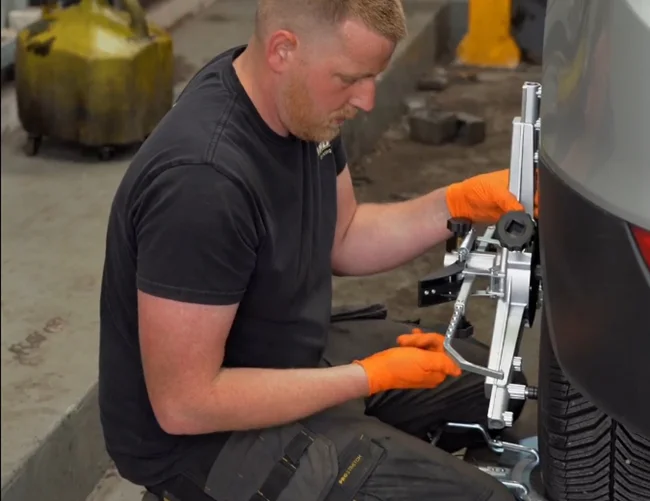
Most wheel alignments are done with a laser-based approach; these systems utilise fixed heads attached simply to, or hung from each wheel, projecting laser beams to measure angles and positions. Laser systems are often praised for their robustness and reliability, making them a suitable choice for certain applications.
Some of the main benefits of wheel alignment/tracking are:
Improved handling – properly aligned wheels will make your car handle better on the road, especially when you are driving at higher speeds. If your wheels are not aligned, your car may drift to one side of the road and this is dangerous.
Improved fuel efficiency – when your car’s wheels are properly aligned, they will roll more smoothly down the road. This means that your car will not have to work as hard to move forward, which will save you money on gas.
Increase the lifespan of your tyres – when your car’s wheels are out of alignment, your tyres will wear down unevenly. This can cause your tyres to develop bald spots or to wear down completely. Replacing tyres can be expensive, so it is important to do everything you can to extend their lifespan.
Improved safety – when your car’s wheels are properly aligned, it will handle better on the road. This means that you will be less likely to get into an accident. In addition, properly aligned wheels can improve your car’s braking performance. This means that you will be able to stop your car more quickly in an emergency.
If your car is making strange noises when you are driving, it could be a sign that your wheels are out of alignment. When your wheels are properly aligned, they rotate smoothly along the road surface. But when they are out of alignment, they can create a thumping noise that is hard to ignore. If you hear a strange noise coming from your car, it is a clever idea to have it checked out by a professional. They can determine if your wheels are the source of the noise, and, if so, they can realign them to reduce the noise.
How Tyres affect your car’s Handling and Fuel Efficiency
Tyres play a crucial role in a vehicle’s performance, influencing both handling and fuel efficiency.
Tyre pressure and its effects
Air pressure and Underinflation – Underinflated tyres increase rolling resistance, leading to higher fuel consumption and premature wear, they also cause uneven tyre deformation, reducing handling precision and safety.
Tyre Pressure Maintenance
Regularly checking tyre pressure helps maintain optimal handling and fuel efficiency. Properly inflated tyres reduce energy loss, ensuring a smoother and more economical drive.
Rolling Resistance and Coefficient
Rolling Resistance refers to the energy lost when a tyre moves along the road. Lower rolling resistance coefficient means less energy is required to keep the car moving, improving fuel efficiency.
Tyre Types and Energy Efficiency
Different tyre types have varied rolling resistance levels. Lower rolling resistant tyres are designed to improve fuel efficiency by reducing energy loss, making them a great choice for drivers looking to maximise efficiency.
Traction and Grip
Traction and grip determine how well a vehicle adheres to the road, Tyres with good grip improve handling and reduce stopping distances, enhancing overall safety.
Tyre Wear and Tread Depth
As tyres wear, their ability to provide adequate traction diminishes. Maintaining proper tread depth can help ensure optimal performance and safety, especially on wet or slippery conditions.